

A shopper can love your artwork and still leave a prompt pack sitting in their cart. For download shops, abandoned cart emails work best when they remove uncertainty about the files, payment, and access.
You don’t need five versions of “buy now.” You need five distinct reasons to reconsider, with reminders that stop when someone buys or opts out.
Start by deciding who should receive them, then use a sequence that answers the questions digital buyers ask.
Key Takeaways
- Give each email a separate purpose: remind, explain access, answer concerns, demonstrate usefulness, and close the sequence.
- Treat the five-message schedule as a starting point, not a requirement for every cart.
- Explain file formats and usage rights accurately, and keep incentives optional.
- Stop recovery messages after purchase or unsubscribe, and measure purchases rather than opens.
Which Abandoned Carts Deserve an Email?
Abandoned cart emails follow up with identifiable shoppers who leave without completing a purchase. However, adding an item doesn’t automatically give you permission to contact someone.
Baymard’s checkout usability research reports widespread cart abandonment across ecommerce. That doesn’t tell you how many buyers your download shop can recover.
Prioritize checkout intent
Start with shoppers who reached checkout, supplied an email address, and are eligible to receive marketing. Someone viewing a coloring-page preview has shown less buying intent than someone entering payment details.
Low-priced carts can deserve follow-up because downloads don’t have per-order fulfillment labor. Still, a five-message flow can overwhelm a shopper considering one small purchase. Start those carts with one or two useful reminders.
Separate failed payments from ordinary abandonment
A failed payment needs practical help, not escalating persuasion. Explain how to retry through your secure checkout without requesting card details by email.
Meanwhile, a successful payment followed by missing files is a support issue. Send access assistance rather than asking the customer to buy again.
Many carts are abandoned because buyers aren’t sure how they’ll get the files. Make sure your digital product delivery after checkout works before you start reminding people to come back.
Free: the AI Art Starter Pack
Want art to practice with? Grab a free pack of AI art images you can use to make your first printable, template or freebie, no prompting required.
Email 1: Restore the Cart After Two Hours
Purpose: Help an interrupted shopper return without searching for the product again.
For this first abandoned cart email, use light personalization by naming the selected download. Make the subject line specific to that product.
Use two hours after abandonment as an initial test. Include the selected download, its current price, and one call to action leading to the restored checkout. Avoid sending them to your homepage.
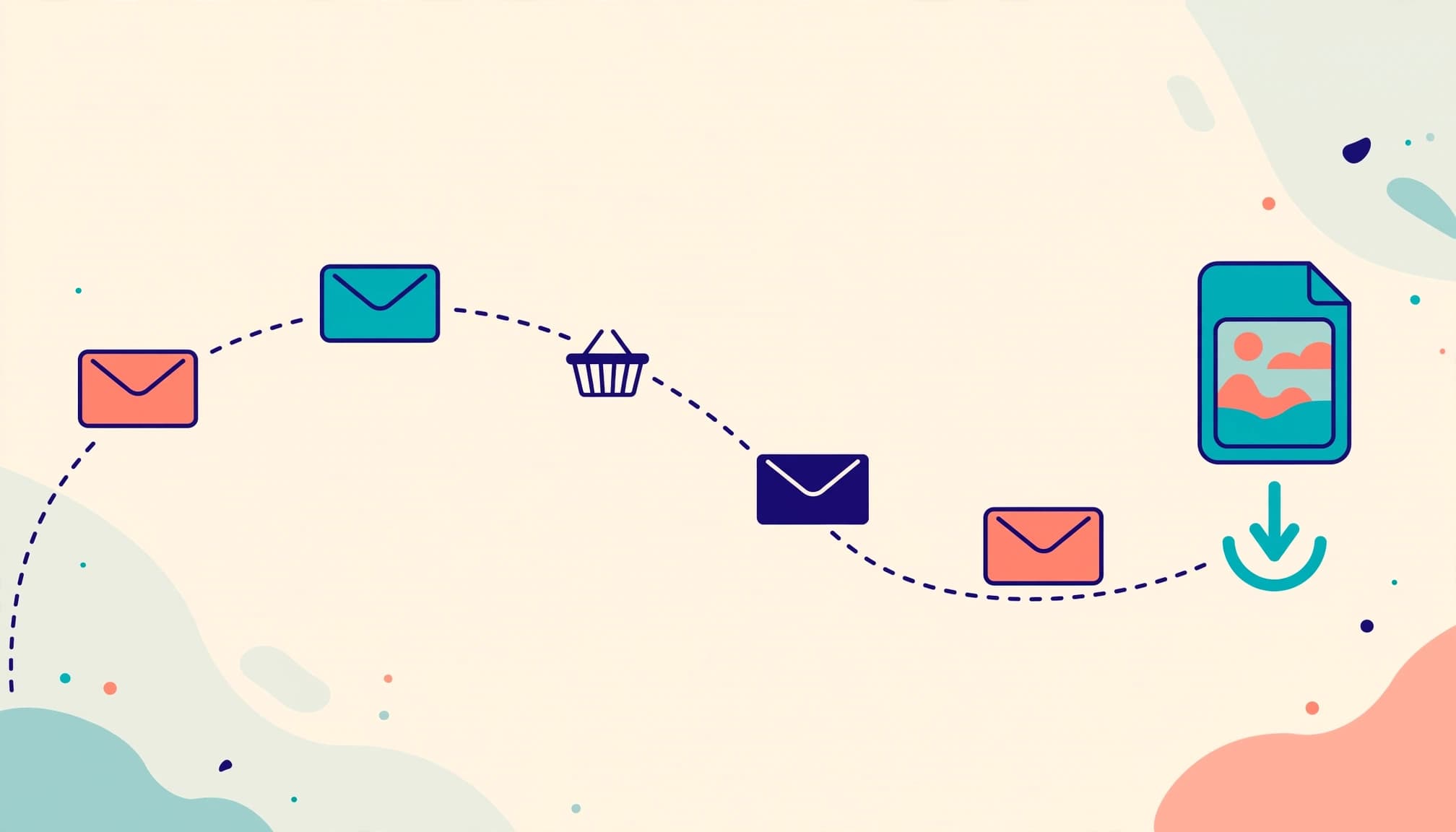
Subject: Your prompt pack is still in your cart
Hi there,
You left a prompt pack in your cart. If you were interrupted, you can return to checkout below.
It’s a digital download, so you can start using it once payment is complete and your files are available.
Have a question before buying? Reply and ask.
Return to checkout
Keep this first message light. A discount here can make full-price shoppers wonder whether waiting always brings a better deal.
Email 2: Explain File Access After 24 Hours
Purpose: Show what happens immediately after purchase.
Digital beginners may wonder whether they’re buying a physical product, a PDF, or access to an app. Name the actual format and explain where the download link appears.
The wording below suits a shop providing links on the confirmation page and by email. Use only the access routes your checkout provides.
Subject: How you’ll access your prompt pack
Your prompt pack is a downloadable PDF.
After payment, your download link appears on the order confirmation page. We’ll also email it to you, so you can return to your files later.
Save the PDF to your device and open it with a PDF reader. The prompts are inside the document, ready to copy into your chosen AI tool.
Complete your purchase
Also distinguish the product from any required software subscription. Buying a prompt pack doesn’t include paid access to the AI tool unless that’s part of the offer.
Email 3: Answer Checkout Concerns After 48 Hours
Purpose: Use this abandoned cart email to resolve one concrete objection, not repeat the reminder.
Common digital-product concerns include compatibility, unclear licensing, unexpected taxes, and payment security. Address the question most relevant to the selected product.
Subject: A question about using your download?
Before you finish checkout, here’s one useful distinction: the prompt pack provides instructions for creating images, rather than a collection of finished artwork.
Results vary by AI tool and your settings. The product description explains the format and intended use.
Unsure whether it fits your project? Reply with what you want to create, and we’ll help you understand the offer.
Return to your cart
For PLR workbooks or artwork bundles, replace that explanation with precise permission details. Our guide to PLR license terms explains why editing rights, resale rights, and commercial use need separate attention.
Avoid describing all downloads as unrestricted. Permission depends on the product’s license.
Email 4: Show a Useful First Step on Day Four
Purpose: Make the product’s narrow, practical value easier to see.
Beginners often hesitate because they can’t picture what they’ll do with a download. Show one manageable starting action, supported by a genuine preview if available.
Subject: Start with one image, not a whole collection
You don’t need to create an entire collection on your first attempt.
Start with one prompt, choose a subject, and generate a few variations. Then compare the results before changing another detail.
A focused first session can help you learn how the prompt works without tackling several projects at once.
If that approach fits your plans, your cart is ready below.
Get the prompt pack
Keep the promise realistic. A guide can help buyers generate options; it can’t promise a bestselling shop.
For buyers planning printable products, our guide to selling AI wall art adds practical context beyond the initial download.
Email 5: Close the Sequence on Day Seven
Purpose: Send the final of your abandoned cart emails without pressure or invented urgency.
This message closes the abandoned cart sequence. It doesn’t need a discount, and downloadable files don’t have limited stock.
Subject line: Your final cart reminder
This is our last reminder about the prompt pack in your cart.
If it fits a project you’re ready to start, you can complete checkout below.
If now isn’t the right time, that’s fine. We won’t send more reminders about this cart.
Thanks for considering our downloads.
Complete checkout
If you use an incentive, make it a genuine, enforceable offer with a real expiration date. Reserve any discount code for eligible buyers rather than adding one to every cart.
A relevant sample can also reduce uncertainty, but keep it tied to the paid product. Introducing unrelated bundles at this stage can distract buyers from their original choice.
Set Automation Rules Before Switching It On
Stop messages when the situation changes
Before every send, exclude completed purchases, unsubscribes, and suppressed addresses from the abandoned cart flow. In Klaviyo, confirm the flow stops when someone purchases or unsubscribes. Also prevent overlapping sequences when someone abandons another checkout.
In Shopify, distinguish checkout abandonment from browsing and product delivery events. Use personalization to match the selected download or checkout state without exposing unnecessary shopper data. Test the recovery link on mobile to confirm it restores the correct item and price.
After purchase, move the buyer into delivery and support emails. Cart reminders should never compete with an order confirmation.
Control frequency and incentives
Five messages are a ceiling for this sequence, not a minimum. For low-value carts, start with two. Continue longer flows only when they produce worthwhile sales without excessive complaints.
Also count newsletters and launch emails toward the shopper’s overall frequency.
Repeated discounts can teach buyers to wait. Compare an incentive with a no-discount version, and judge the difference using revenue after the discount rather than coupon redemption alone.
Are Abandoned Cart Emails Legal?
US rules cover commercial email
Treat recovery emails as marketing rather than disguising them as order updates.
The FTC’s CAN-SPAM compliance guide requires accurate sender information, nondeceptive subject lines, a valid postal address, and a working opt-out mechanism. Honor opt-out requests within 10 business days.
CAN-SPAM generally doesn’t require advance opt-in. However, that doesn’t override stricter laws elsewhere or your email platform’s permission requirements.
European consent needs separate treatment
Entering an email at checkout doesn’t automatically establish marketing permission.
European electronic-marketing rules generally require prior consent, with limited existing-customer exceptions that depend on national law. TermsFeed’s abandoned-checkout legal guidance distinguishes prospects from customers eligible for an exception.
For a beginner-friendly setup, collect clear marketing consent through an unticked checkbox and store the consent record. Include an unsubscribe option in every recovery email. Legal advice is appropriate when selling across jurisdictions with different requirements.
Measure Sales Without Overclaiming Recovery
Track the whole path
Record eligible abandoned checkouts, delivered messages, checkout clicks, completed purchases, discounts, and refunds. Keep traffic sources separate because existing subscribers may behave differently than first-time visitors.
Open rates don’t prove buying intent. Clicks, replies, and completed purchases give you more useful evidence.
If shoppers repeatedly report confusing access or unexpected charges, fix the checkout itself. Baymard’s checkout improvement research reinforces the importance of reducing purchase friction.
Distinguish attributed sales from additional sales
An email platform may credit a purchase because the buyer clicked a recovery message. Some of those buyers would have returned anyway.
When volume allows, randomly hold back a small group of eligible shoppers from recovery emails. Compare completed-purchase rates over the same period.
Evaluate additional revenue after discounts and refunds. For a small shop, also record recurring questions: several confused replies can identify a product-description problem faster than a dashboard.
Keep learning
Before a buyer ever reaches the cart, a 5-email prelaunch sequence can answer most of their questions. After the sale, clear product instructions keep them happy. For free AI art tutorials, visit my That PLR Shop YouTube channel.
Skip the blank page
The AI Art & Marketing Club gives you fresh art, a product plan and a marketing plan every month, so you always know what to make and how to sell it. Prefer to buy one pack at a time? The shop has themed art packs, prompt packs and bundles ready to customize.
Club and shop art can be used to create new finished products that you sell with commercial, PLR or MRR rights. The original images can’t be resold or given away as-is. Full license terms.
Frequently Asked Questions
Should every shopper receive all five emails?
No. Stop after purchase, unsubscribe, or a support issue requiring a different response. Shorter sequences also suit inexpensive, simple downloads.
Should recovery emails recommend other products?
Usually, keep attention on the selected download. A relevant next offer belongs more naturally after purchase, once delivery and support are complete.
How can shoppers stop abandoned cart emails?
They can use the unsubscribe link. Shops should suppress further marketing promptly and stop the cart sequence automatically after a purchase.
Recover Sales by Making the Purchase Clearer
Your shopper may need a reminder, but they may also need to understand exactly what they’re buying. Useful abandoned cart emails answer those questions without overstating results.
Keep clarity and permission at the center of the sequence. Explain the files, make access simple, and let the final message be final.
A recovered sale should begin a helpful customer experience, with reliable delivery and support after payment.
Share On Pinterest!
Want to come back to this later? Save one of these pins to your Pinterest board.



One Comment