
A polished freebie can attract subscribers, but it needs a clear next step to support sales. A PLR lead magnet gives you a starting point, then your perspective, teaching, and design turn it into something people will want to download.
For AI art and digital-product beginners, a PLR lead magnet can be an ethical first step in an online business and support lead generation by attracting the right audience. Solve one small problem for free, then offer deeper guidance for purchase. Treat PLR as raw material, not a finished branded resource or content to publish unchanged.
Key Takeaways
- Choose PLR only after you know the target audience, their immediate problem, and the paid result you want to offer next.
- Read each license before editing, giving away, bundling, or selling a Private Label Rights product.
- Make meaningful changes to the title, structure, examples, visuals, and exercises so the finished resource reflects your brand.
- Focused lead magnets build trust faster than broad ebooks packed with unrelated advice.
- Use an email sequence to deliver the free resource to your email list, help subscribers use it, and introduce the logical paid offer.
Know What You Can Do With PLR Content
Private Label Rights can give you permission to adapt pre-made content, including material for PLR ebooks, under stated conditions. It does not automatically give you copyright ownership or unlimited commercial rights.
The U.S. Copyright Office’s copyright overview explains that copyright protects original works of authorship. A PLR purchase is usually a license from the original creator, so the written terms control what you may publish and sell.
Read the product-level license first
Before you write a new title or upload a PDF, check whether the license permits your intended use. Look for rules about commercial resale, free distribution, editable files, PLR ebooks, bundles, memberships, marketplaces, paid ads, and attribution.
Even when PLR products arrive as done-for-you content, convenience doesn’t remove the need to review permissions. A license may allow a finished branded PDF for end customers while forbidding resale of the Canva template, DOCX file, or original ZIP folder. It may also block you from passing PLR rights to your customers. Review the PLR license terms for the exact product, not a general assumption based on the label.
Keep the invoice, product URL, license version, original download, vendor messages, and your edited files in one folder. Those records make it easier to confirm what you bought later.
PLR, resell rights, and MRR aren’t interchangeable
PLR commonly allows editing and rebranding, subject to restrictions. Resell Rights often permit you to sell a product as supplied, though edits may be prohibited. Master Resell Rights may allow buyers to resell, but the agreement can still restrict editing or further transfers.
Unlike PLR, Master Resell Rights don’t necessarily let you rewrite or rebrand the source product. Master Resell Rights also don’t automatically let you pass broader rights to buyers, since those permissions depend on the agreement.
A new cover never expands the rights you purchased. Your customers can receive only the permissions your license clearly allows.
Most PLR is non-exclusive. Other sellers may start with the same source files, which is another reason to build a distinctive product rather than market it as unique.
Start With the Paid Offer, Not the Download
A free lead magnet works when it leads naturally to a paid solution. If the two offers address different needs, subscribers may enjoy the freebie but ignore the sale.
For example, a beginner who wants to create AI art printables as digital products doesn’t need a broad guide to online business. They need help choosing a theme, creating usable images, and preparing a first product.
Pick one buyer problem
Define your target audience by naming the person, their obstacle, and the immediate result they want.
For instance: “New AI art creators who have image ideas but don’t know how to turn them into their first printable collection.”
That statement helps you reject PLR that doesn’t fit. A broad source of PLR ebooks may contain useful pages, yet it won’t support this offer path without substantial narrowing and rewriting. Use PLR product research tips to compare a resource’s audience, format, and promised outcome with your existing content.
Map the free and paid roles
The free offer should help someone take a useful first action. The paid offer should provide a fuller process, deeper support, or ready-to-use resources for your online business.
| Offer stage | Example for AI art beginners | Job it does |
|---|---|---|
| Free lead magnet | Printable Collection Starter Checklist | Helps readers choose a theme and prepare their first five images |
| Low-cost paid offer | AI Art Printable Launch Workbook | Guides product creation, listing images, descriptions, and file setup |
| Higher-value offer | Printable Product Workshop or bundle | Provides detailed lessons, templates, and feedback or expanded assets |
The free checklist proves that your method is practical. The paid workbook helps subscribers complete the larger project.
For a step-by-step rewrite process, see how to customize PLR content without losing your brand voice.
Free: the AI Art Starter Pack
Want art to practice with? Grab a free pack of AI art images you can use to make your first printable, template or freebie, no prompting required.
Customize PLR Until It Sounds Like You
Changing fonts and colors isn’t enough. Don’t publish done-for-you content unchanged. Buyers notice when a resource has generic advice, mismatched pages, or examples that don’t reflect the promise on the cover.
Rewrite the material around one use case, then remove anything that distracts from that result.

Rebuild the structure around a clear outcome
Start by renaming the asset. A title like “Creative Success Workbook” says little, while “Plan Your First AI Art Printable Collection” sets a clear expectation.
Next, reorder the content into the steps your reader needs. The same process works for PLR ebooks and other source material. A beginner-friendly workbook could move through theme selection, prompt planning, image review, file preparation, and product-page assets. Add a short introduction in your voice and explain who the resource is for.
This approach helps you create branded digital products with a clearer purpose. Cut pages that don’t support the promised result. A shorter, sharper 12-page guide often feels more useful than a 40-page download with filler.
Add original teaching and quality checks
Make the resource more useful with examples from your niche and lessons from your content creation process. Add prompt variations, realistic cautions, troubleshooting notes, worksheets, and an action plan that reflects how you teach.
Replace generic visuals with on-brand graphics or original imagery. Treat visuals, worksheets, and templates as brandable content that should reflect your identity. If you use generated images, review the commercial terms for your tools and learn more about AI art in PLR products before including graphics in products for sale.
Use this review before publishing:
- Read every page aloud to catch repeated phrases, vague instructions, and language that doesn’t match your voice.
- Check facts, links, product claims, and any recommendations that may be outdated.
- Test every worksheet, prompt, template, or checklist yourself before customers receive it.
- Export the final file and review it on both desktop and mobile screens.
- Confirm that the cover, delivery email, landing page, and paid offer all promise the same result.
Turn One PLR Asset Into the Right Lead Magnet
PLR ebooks, workbooks, prompt packs, and email sequences can become focused lead magnets when you narrow their scope. Use PLR ebooks as source material, then shape the free resource around one clear list building goal and your online business offer. Avoid giving away the entire paid solution.
Use a small, complete win
A checklist works well when someone needs confidence and a clear order of operations. For example, turn a larger PLR module about digital products into a “First Printable Product Prep List.”
A short worksheet can also work. Give readers space to choose their art style, target buyer, collection theme, and first product format. They leave with a decision, not more information to sort through.
Match the format to the next sale
Use a mini-guide when your paid offer expands the strategy. Use a template when your paid offer teaches implementation. Use a five-day email mini-course when your paid product adds worksheets, examples, and a complete workflow.
Don’t make the free resource too broad. “50 Ways to Make Money With AI” attracts curiosity, but “Five AI Art Themes You Can Turn Into Printable Collections” attracts readers who are closer to your paid workbook.
Build a Landing Page and Email Funnel
A landing page has one job: help the right person understand the value of subscribing. Keep distractions low and make the promised outcome easy to grasp.

Write a page around one immediate benefit
Use a specific headline, a short explanation, a preview image, and a simple opt-in form. PLR ebooks are one possible source format for the adapted resource. Mailchimp’s landing page guidance recommends headlines that are clear, relevant, and relatable.
A practical example:
Headline: Plan Your First AI Art Printable Collection
Supporting copy: Use this quick checklist to choose a theme, organize your images, and prepare your first digital download idea.
Then state what subscribers receive and how it helps. A focused promise can position the resource as a high-converting lead magnet for a small online business. Ask only for the details you need, usually a first name and email address.
Deliver value before presenting the offer
Your first email should arrive promptly with the download link and a brief note on how to use it. This gives your email list an immediate reason to engage. Follow with two or three useful messages that help subscribers act on the free resource.
A simple email marketing sequence might look like this:
- Deliver the checklist and invite the reader to complete the first step.
- Share an example of how a focused printable collection comes together.
- Address a common obstacle, such as choosing a theme or packaging files.
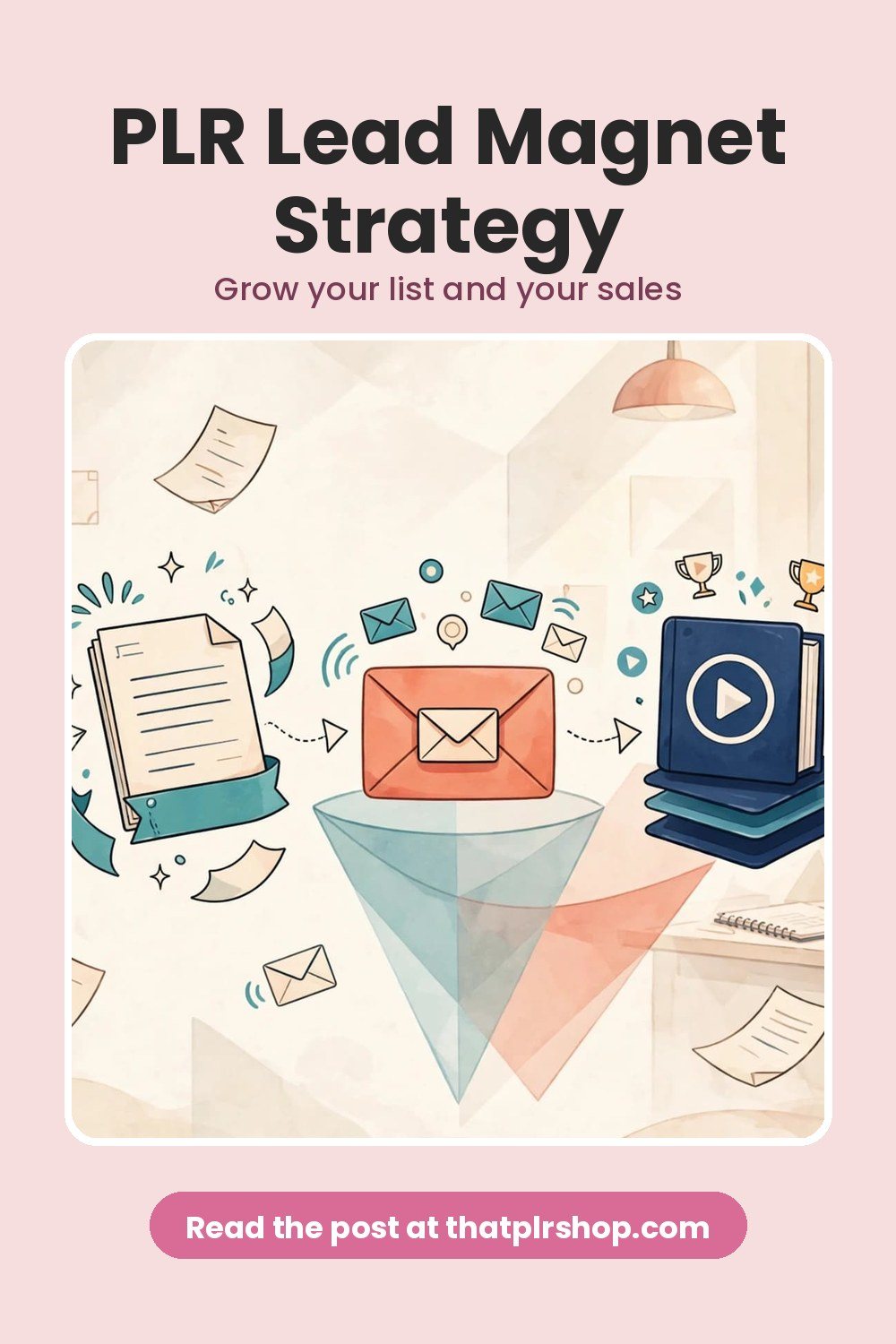
- Introduce the paid workbook as the next step in the sales funnel for creating and listing the product.
If you send commercial email to U.S. recipients, follow the FTC’s CAN-SPAM compliance guide. Use accurate sender details, honest subject lines, a physical mailing address, and a clear unsubscribe option.
Promote the Opt-In Where Beginners Already Learn
Promotion works better when each post previews one useful idea from your lead magnets. This broader digital marketing approach should match your marketing strategy, guiding readers toward the right next step.
Share short, useful content
Turn pages from PLR ebooks into social media posts, short videos, carousel ideas, or newsletter tips. Show a theme-planning exercise, a before-and-after product concept, or a mistake beginners can avoid.
Mention the free resource only after delivering a useful takeaway. The post should still help someone who doesn’t download it.
Watch the right signals
Track page visits, opt-ins, email opens, clicks to the paid offer, sales, and conversion rates. Compare traffic generation across social posts, search, referrals, and partnerships. These numbers reveal where people lose interest in your online business.
If traffic generation is weak and landing page visits stay low, sharpen the promise or improve the page preview. If subscribers download but don’t click the offer, the paid product may need a clearer connection to the free resource. Test one change at a time so you know what improved.
Common PLR Mistakes That Hurt Trust
Publishing PLR ebooks with minimal edits creates a forgettable experience. It can also leave you with examples, advice, and visuals that don’t fit your buyers.
Avoid these common problems:
- Buying an attractive file before defining the buyer problem it needs to solve.
- Assuming PLR products allow giveaways, paid courses, bundles, or editable-file resale without checking the agreement. A label such as Master Resell Rights doesn’t automatically permit every type of resale or transfer.
- Giving away the same transformation through your lead magnets that you expect customers to buy.
- Using broad promises, such as guaranteed sales or instant income, that your resource can’t support.
- Forgetting to test links, download access, templates, and PDFs before launch.
- Treating subscribers as ready to buy immediately instead of teaching them how to use the free resource first.
Transparent positioning builds more trust than inflated promises. Let the free resource solve a small problem well, then make the paid offer the sensible next move.
Keep learning
Your paid offer needs a sales page that converts, and your new subscribers need a prelaunch email sequence that leads to it. Pinterest is one of the best ways to promote a freebie. Here’s how I make Pinterest images with ChatGPT:
Skip the blank page
The AI Art & Marketing Club gives you fresh art, a product plan and a marketing plan every month, so you always know what to make and how to sell it. Prefer to buy one pack at a time? The shop has themed art packs, prompt packs and bundles ready to customize.
Club and shop art can be used to create new finished products that you sell with commercial, PLR or MRR rights. The original images can’t be resold or given away as-is. Full license terms.
Frequently Asked Questions
Can I use PLR ebooks as a free email opt-in?
You can use PLR ebooks as lead magnets only when the individual license allows free distribution or email-list use. Check the restrictions before publishing, because some licenses permit paid resale but prohibit giveaways.
Can I sell a PLR-based workbook?
You may sell a finished, branded workbook if the license permits commercial resale and the edits meet its requirements. Master Resell Rights don’t replace the permissions granted by the product-specific license. Many agreements prohibit raw files, editable templates, or resale rights for your buyers.
How much should I change a PLR product?
Change more than the cover. Remove irrelevant pages, add your own examples and exercises, revise the structure, update claims, and create visuals that fit your buyer’s needs. The final product should solve a clear problem in your voice.
Build a Product Path, Not a File Collection
A PLR lead magnet works when it gives subscribers a genuine first win and points toward a useful paid result. The source material may save time, but your teaching, edits, and quality checks are what make it worth downloading.
Choose fewer resources that fit your audience, document whether you have Master Resell Rights, and make every freebie support sustainable online business growth through a clear customer journey.
Share On Pinterest!
Want to come back to this later? Save one of these pins to your Pinterest board.